
Journal · May 19, 2026
Building Good Eating Habits in Children: Simple Steps for a Lifetime of Healthy Choices
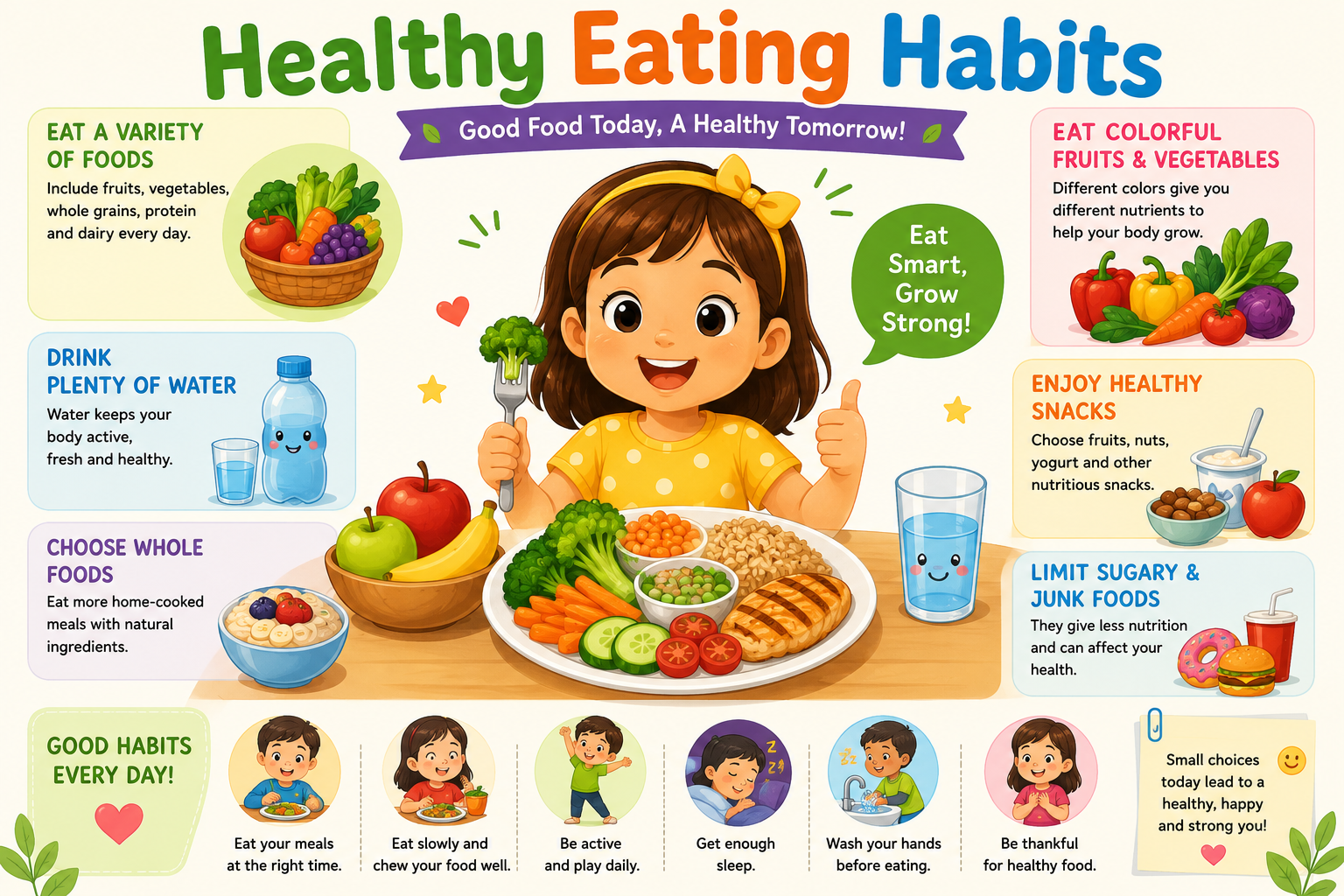
Healthy eating habits begin long before children learn about nutrition in school. The foods children eat during their early years help fuel their growing bodies, support brain development, strengthen their immune systems, and establish patterns that often last into adulthood.
As parents, one of the most important things we can do is create a positive food environment where healthy eating feels natural, enjoyable, and stress-free.
The goal isn't perfection. It's about helping children build a healthy relationship with food—one based on balance, variety, and mindful enjoyment.
Let's explore simple steps to encourage good eating habits in children.
Why Early Eating Habits Matter
Children's taste preferences and eating patterns are shaped during the early years. Studies show that children who are exposed to a wide variety of healthy foods from a young age are more likely to maintain balanced diets as they grow.
Good eating habits support:
- Healthy physical growth
- Strong brain development
- Better concentration and learning
- Stronger immune systems
- Healthy weight and energy levels
- Positive relationships with food
Building these habits early is much easier than changing them later.
Make Family Meals a Priority
Eating together as a family is one of the most effective ways to encourage healthy eating. Children who regularly share meals with family tend to eat more fruits, vegetables, and balanced foods.
Family meals also provide opportunities to:
- Model healthy eating habits
- Introduce new foods in a relaxed setting
- Build positive conversations around food
- Strengthen family connections
Even a few family meals each week can make a meaningful difference.
Offer a Variety of Foods
Children are naturally cautious about new foods, but repeated exposure helps them become more comfortable.
Try offering a colorful mix of fruits, vegetables, whole grains, proteins, and dairy at each meal. Include different textures, flavors, and cultural foods to expand your child's palate.
Remember that a child may need to see a new food many times before they are willing to try it. Patience is key.
Let Children Listen to Their Bodies
Teaching children to recognize hunger and fullness cues helps them develop a healthy relationship with food.
Avoid forcing children to finish everything on their plate. Instead, encourage them to eat when they are hungry and stop when they are full.
You might say, "You don't have to finish it. Listen to your tummy and tell me when you're full."
Involve Children in Food Choices
Children are more likely to try foods they helped choose or prepare.
Age-appropriate ways to involve children include:
- Picking fruits and vegetables at the grocery store
- Washing produce
- Mixing ingredients
- Setting the table
- Helping with simple cooking tasks
- Choosing between two healthy options
When children feel involved, they develop a sense of ownership and curiosity about food.
Make Healthy Food Fun
Healthy eating doesn't have to be boring. A little creativity can make nutritious foods more appealing to children.
Try ideas like:
- Cutting fruits and vegetables into fun shapes
- Creating colorful rainbow plates
- Making smoothies with hidden vegetables
- Building fruit kabobs
- Using dips like hummus or yogurt
- Naming dishes with playful titles
When healthy food looks fun, children are more curious and willing to taste it.
Limit Processed Foods and Sugary Drinks
Processed snacks and sugary drinks can crowd out more nutritious options and affect children's energy, mood, and health.
You don't need to ban treats completely. Instead, focus on balance. Keep healthy snacks like fruits, nuts, yogurt, and whole-grain crackers readily available, and save sweets for special occasions.
Water and milk should be the main drinks for young children. Limit juice and sugary beverages to occasional treats.
Be a Healthy Eating Role Model
Children watch what their parents eat. If they see adults enjoying vegetables, whole grains, and balanced meals, they are more likely to do the same.
Avoid negative comments about foods or diets. Instead, talk positively about how food gives energy, helps us grow, and keeps us strong.
Avoid Food Battles
Mealtime should not become a power struggle. Pressuring children to eat certain foods often backfires, making them resist even more.
A better approach is to offer healthy choices and let children decide what and how much to eat from what is available.
Stay calm, keep offering a variety of foods, and trust that children's appetites and preferences will change over time.
Teach Mindful Eating
Mindful eating means paying attention to food and the experience of eating. It helps children enjoy meals and recognize their body's signals.
Simple mindful eating habits include:
- Eating at the table without screens
- Chewing slowly
- Noticing colors, smells, and textures
- Talking about how food tastes
- Saying thank you for the meal
These small habits help children develop a respectful and joyful relationship with food.
Final Thoughts
Building good eating habits in children is a gradual process. It takes patience, consistency, and a lot of small, positive choices.
By offering a variety of healthy foods, eating together as a family, involving children in meal preparation, and modeling balanced choices, parents help set the foundation for a lifetime of healthy eating. Every nutritious meal and positive conversation about food brings your child one step closer to a healthy, happy future.