
Journal · May 12, 2026
The Importance of Routine Health Check-Ups for Children: Growing Healthy Every Step of the Way
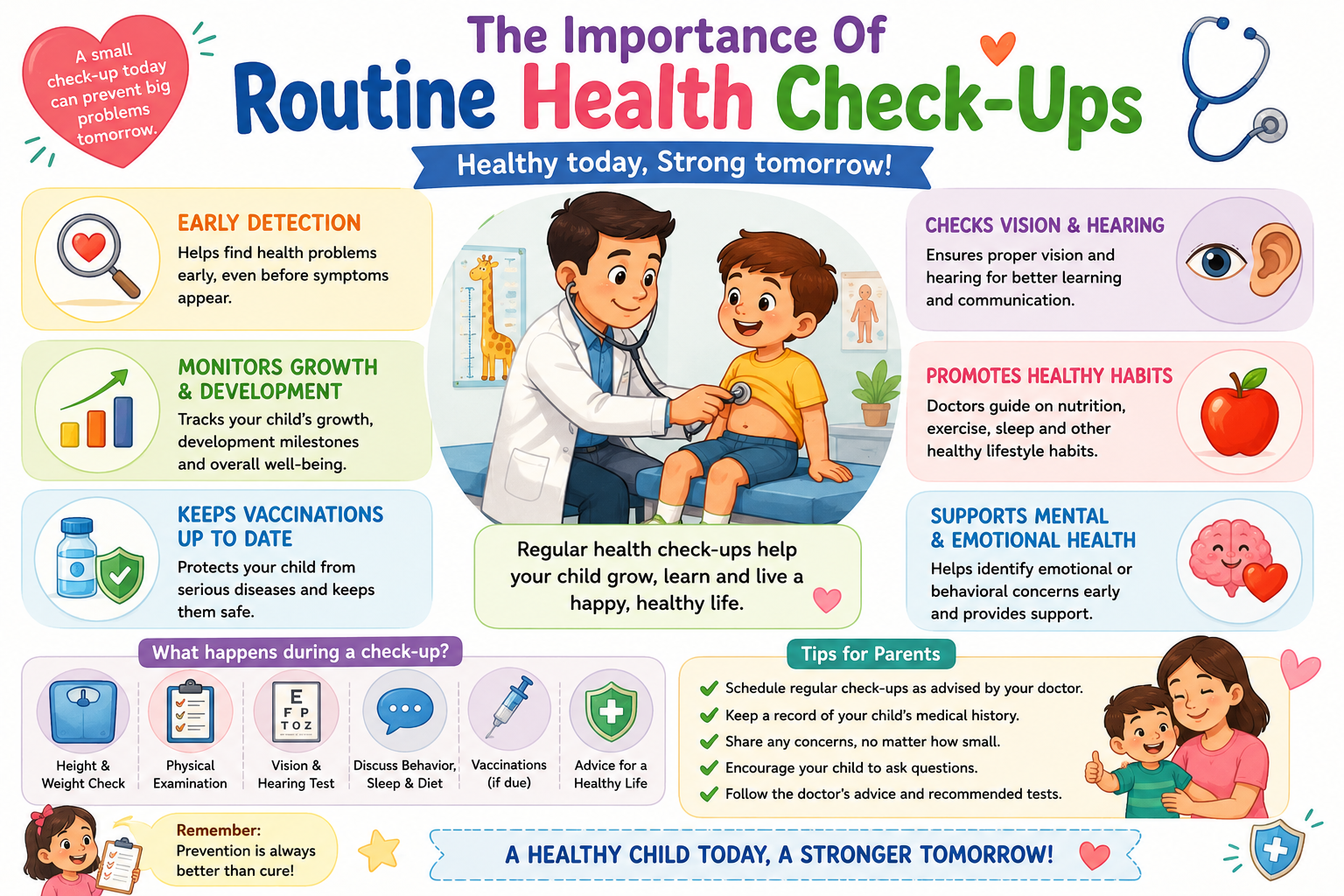
Every parent wants to see their child grow up healthy, active, and full of energy. While nutritious food, regular exercise, and quality sleep all play important roles, one habit is often overlooked—routine health check-ups.
Regular visits to the pediatrician help track a child's growth, catch potential health concerns early, and provide parents with guidance on development, nutrition, safety, and emotional well-being.
These visits are not only for when a child is sick. Preventive care is one of the best ways to protect a child's long-term health.
Let's explore why routine check-ups matter and what parents can expect during these important appointments.
Why Routine Check-Ups Are Important
Children grow and change rapidly. Routine health check-ups allow doctors to monitor this growth and identify any concerns before they become serious problems.
Regular visits help ensure that children are:
- Growing at a healthy rate
- Meeting developmental milestones
- Receiving necessary vaccinations
- Getting enough nutrition and sleep
- Developing healthy habits
- Receiving support for emotional and behavioral needs
Early detection of health or developmental issues often leads to simpler, more effective treatment.
What Happens During a Pediatric Check-Up
A routine check-up is usually a comprehensive visit. The pediatrician will review the child's overall health and development.
Typical parts of the visit include:
- Measuring height, weight, and head circumference
- Checking vital signs such as heart rate and blood pressure
- Performing a physical examination
- Reviewing vision and hearing
- Discussing developmental milestones and behavior
- Updating vaccinations
- Answering parents' questions and concerns
These visits are also a chance for parents to ask about sleep, nutrition, school performance, screen time, and emotional health.
Tracking Growth and Development
Growth charts are one of the most important tools used during pediatric visits. They help doctors compare a child's growth to healthy ranges for their age and gender.
Steady growth is a strong sign of good health. If growth slows or changes unexpectedly, the doctor can investigate possible causes such as nutrition, sleep, or underlying health conditions.
Developmental milestones, such as walking, talking, social interaction, and school readiness, are also reviewed at each age.
Vaccinations Protect the Whole Community
Vaccinations are a critical part of routine check-ups. They protect children from serious diseases such as measles, polio, whooping cough, and hepatitis.
Keeping vaccinations up to date not only protects your child but also helps protect younger children, elderly people, and those with weakened immune systems.
Pediatricians follow recommended immunization schedules based on the latest medical guidance. If you have questions about vaccines, your child's doctor is the best source of accurate information.
Preventive Care Catches Problems Early
Many health issues can be treated more effectively when found early. Routine check-ups allow doctors to screen for problems that may not be obvious at home.
Examples include:
- Vision problems
- Hearing difficulties
- Allergies
- Nutritional deficiencies
- Speech delays
- Behavioral or learning concerns
- Oral health issues
Early intervention often leads to better outcomes for children and less stress for families.
Building Trust with the Doctor
Regular visits help children build a comfortable relationship with their healthcare provider. When children see the doctor for routine care, they learn that medical visits are a normal part of staying healthy.
A pediatrician who knows your child's history can provide more personalized care and better support during both routine visits and illnesses.
For anxious children, parents can help by preparing them in advance, bringing a favorite toy, and praising them for being brave.
When to Schedule Check-Ups
In the first years of life, children typically have more frequent visits because they grow so quickly. After age three, yearly well-child visits are usually recommended.
Common schedules include:
- Newborn visits in the first few weeks
- Check-ups at 2, 4, 6, 9, 12, 15, and 18 months
- Annual visits starting at age 2 or 3
- Pre-school, school-entry, and sports physicals
- Additional visits if health concerns arise
Your pediatrician can recommend the best schedule based on your child's individual needs.
How Parents Can Prepare for a Check-Up
A little preparation can help make the visit smoother and more productive.
Before the appointment, consider:
- Writing down questions or concerns
- Bringing a list of medications or allergies
- Noting any changes in eating, sleeping, or behavior
- Bringing the child's immunization record
- Talking to your child about what to expect
Being prepared helps parents get the most out of the visit and ensures that important topics are not forgotten.
Healthy Habits Between Visits
Routine check-ups are important, but daily habits matter just as much.
Between visits, parents can support their child's health by:
- Offering balanced meals and limiting sugary snacks
- Encouraging active play and physical activity
- Supporting healthy sleep routines
- Promoting handwashing and hygiene
- Limiting screen time
- Creating a safe home environment
- Supporting emotional well-being
These everyday choices work together with routine medical care to keep children healthy and thriving.
Final Thoughts
Routine health check-ups are one of the most valuable investments parents can make in their child's future. They provide peace of mind, catch potential concerns early, and ensure that children receive the care and guidance they need at every stage of development.
By staying consistent with well-child visits, asking questions, and following your pediatrician's recommendations, you help your child grow healthy, strong, and ready to take on the world. Every check-up is a step toward a healthier, happier childhood.